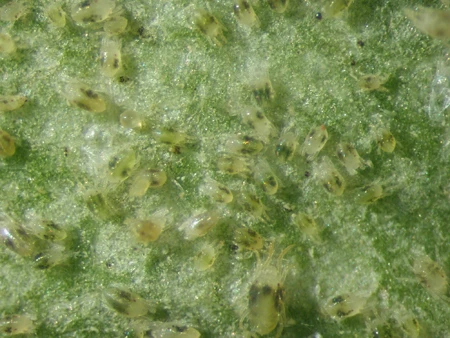
The shorter day lengths and cooler temperatures are causing spider mites to enter a period of hibernation called diapause. Univ. of Mass. Floriculture specialist Tina Smith said this period of rest helps spider mites to survive colder winter temperatures. The mites also enter diapause in the summer during periods of hot temperatures and drought.
As the mites enter this diapause period they move away from the plants toward the greenhouse floor looking for crevices away from light. The mites remain dormant until favorable conditions return in the spring.
During the diapause period spider mites are less susceptible to chemical and predatory mites since they hide in concealed places and don’t feed.
Smith said a large late-summer population of spider mites means a high spring infestation if they are not controlled in the fall. Smith said contact control materials such as horticultural oils and insecticidal soaps are probably the best choices at this time.
Pictured: As temperatures start to cool and the day length shortens spider mites are beginning to enter a period of hibernation called diapause.
Photo by Suzanne Wainright-Evans
Latest from Greenhouse Management
- Millennium Pacific Greenhouses launches California Grown Cucumber Program
- Scientists develop vitamin A-enriched tomato to fight global deficiency
- Tennessee Green Industry Field Day scheduled for June 11
- UTIA and UT Knoxville research teams will develop automated compost monitoring system
- Ken and Deena Altman receive American Floral Endowment Ambassador Award
- [SNEAK PEEK] Leading Women of Horticulture: The women of Fairview Greenhouses & Garden Center
- [SNEAK PEEK] Leading Women of Horticulture: The inventive women of TPIE ’26
- Growing successful spring crops with Topflor