Since there are few fungicides registered for controlling diseases on vegetable seedlings, disease prevention and prompt diagnosis are key components in avoiding major losses. Mich. St. Univ. plant pathologist Mary Hausbeck said as long as greenhouse use is NOT prohibited and a specific vegetable is listed on the label, a fungicide can be used in the greenhouse.
General guidelines provided by Hausbeck for controlling vegetable seedling diseases include:
1. Dedicate operations for seedling/transplant production. Greenhouses that grow both tomato transplants and mature plants for fruit production are especially at risk of keeping diseases active in the greenhouse and available to infect new tomato seedlings.
2. Keep the relative humidity as low as possible (less than 85%) through heating and venting as appropriate.
3. Space plants to prevent pockets of high humidity from forming.
4. Use fans to circulate air and vent to exhaust moisture-laden air out of the greenhouse.
5. Scout seedlings twice a week to ensure that problems are detected early when corrective measures can be taken.
6. If disease symptoms are detected, remove affected plants including adjacent healthy looking plants.
7. Water at a time when plants can dry quickly.
8. Apply fungicide preventively when weather conditions are favorable for disease (i.e. wet, humid).
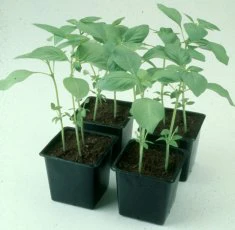
Pictured: Use of strict production guidelines and prompt disease diagnosis are critical to avoiding vegetable seedling losses. Photo courtesy of N.C. Dept. of Ag & Consumer Services
Latest from Greenhouse Management
- The Growth Industry Episode 10: State of the Horticulture Industry
- Millennium Pacific Greenhouses launches California Grown Cucumber Program
- Scientists develop vitamin A-enriched tomato to fight global deficiency
- Tennessee Green Industry Field Day scheduled for June 11
- UTIA and UT Knoxville research teams will develop automated compost monitoring system
- Ken and Deena Altman receive American Floral Endowment Ambassador Award
- [SNEAK PEEK] Leading Women of Horticulture: The women of Fairview Greenhouses & Garden Center
- [SNEAK PEEK] Leading Women of Horticulture: The inventive women of TPIE ’26