Aging increases the risk of salmonella contamination in tomatoes. Green tomatoes resist salmonella more than ripe red ones.
A Univ. of Fla. study found that tomato variety and maturity influence the way salmonella bacteria respond to the fruit. It may be possible to reduce fruit susceptibility to contamination during and after harvest by monitoring ripeness.
The research findings suggest that tomato cultivars may be able to be bred to have more resistance to contamination. The findings also support the thinking that contamination isn’t caused solely by hygiene problems during pinking and handling.
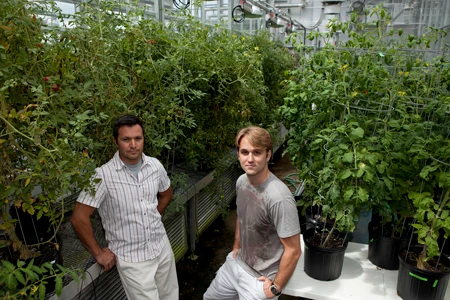
Tomato varieties are being screened to determine which varieties are most resistant to salmonella contamination. The researchers also plan to examine field irrigation and fertilization to determine if they impact produce safety.
Pictured: Univ. of Fla. researchers Max Teplitski (left) and Jason Noel are screening tomato varieties to determine which ones are most resistant to salmonella.
Photo courtesy of Univ. of Fla.
Latest from Greenhouse Management
- The Growth Industry Episode 10: State of the Horticulture Industry
- Millennium Pacific Greenhouses launches California Grown Cucumber Program
- Scientists develop vitamin A-enriched tomato to fight global deficiency
- Tennessee Green Industry Field Day scheduled for June 11
- UTIA and UT Knoxville research teams will develop automated compost monitoring system
- Ken and Deena Altman receive American Floral Endowment Ambassador Award
- [SNEAK PEEK] Leading Women of Horticulture: The women of Fairview Greenhouses & Garden Center
- [SNEAK PEEK] Leading Women of Horticulture: The inventive women of TPIE ’26