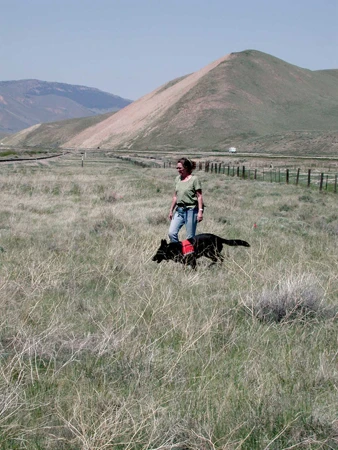
Scientists with the Invasive Weed Prevention Program at Montana St. Univ. have found that dogs can be trained to use scent discrimination and tracking techniques to detect the invasive plant spotted knapweed (Centaurea stobe).
Reporting in the June issue of “Invasive Plant Science and Management”, researchers found that trained detection dogs can locate spotted knapweed more accurately and at a greater distance than humans. Humans did rate higher in precision than dogs, with 100% for humans and 94% for trained dogs. However, the dogs detected a larger percentage of small targets. Based on trial results, the researchers concluded that monitoring of invasive plants by detection dogs can provide greater overall accuracy.
Pictured: Trained detection dogs outperformed humans in locating the invasive plant spotted knapweed.
Photo by Carol Flaherty, Montana St. Univ.
Latest from Greenhouse Management
- The Growth Industry Episode 10: State of the Horticulture Industry
- Millennium Pacific Greenhouses launches California Grown Cucumber Program
- Scientists develop vitamin A-enriched tomato to fight global deficiency
- Tennessee Green Industry Field Day scheduled for June 11
- UTIA and UT Knoxville research teams will develop automated compost monitoring system
- Ken and Deena Altman receive American Floral Endowment Ambassador Award
- [SNEAK PEEK] Leading Women of Horticulture: The women of Fairview Greenhouses & Garden Center
- [SNEAK PEEK] Leading Women of Horticulture: The inventive women of TPIE ’26