Many growers look at the transition between seasons as “downtime” or “lull time,” but Dr. P. Allen Hammer, technical advisor at Dümmen Orange, says they should reconsider this mindset.
“I look at it as probably as important as the crop production time,” Hammer says. “And I don’t think growers need to look at between crops as downtime. They need to really look at it as a really productive time – it’s just a different productive time.”
Aggressive sanitation and equipment maintenance are key to ensuring a successful transition between the seasons, Hammer says.
Sanitation best practices
On the sanitation side, growers should discard leftover plants and debris, Hammer says. Many small- to medium-sized growers like to keep pet plants, but those plants breed pests and disease that could harm operations. “The greenhouse is not the zoo or a botanical garden, so pet plants to me – they just need to get rid of everything and start over again,” he says.
Growers with soil and gravel floors can use hydrated lime (calcium hydroxide) – either by itself or mixed with water – to clean the floors, Hammer says. Thrips have a stage that involves entering the soil, so applying hydrated lime can help control them between crops. However, growers need to be careful with this compound because it is caustic.
Equipment efficiencies
When it comes to maintaining equipment, Hammer says simple processes such as checking and replacing fan belts can go a long way. “A loose fan belt will really undercool a greenhouse,” he says. “So, as you go into summer, you need to make sure the cooling system is as up to par as it can possibly be.”
Growers also shouldn’t wait until the coldest time of year to repair heating systems, Hammer says. Often, heaters without maintenance stop working on the coldest winter night, but such issues can be prevented. Problems can arise with multiple heating system components, such as chimneys, vents and heat exchangers in unit heaters. “Every year, I see two or three cases of ethylene gas damage in the greenhouse, and it’s simply because of heater maintenance,” he says. “It’s either cracked heat exchangers or holes in the flues or faulty chimneys. So, just being ready for the heating season is pretty important.”
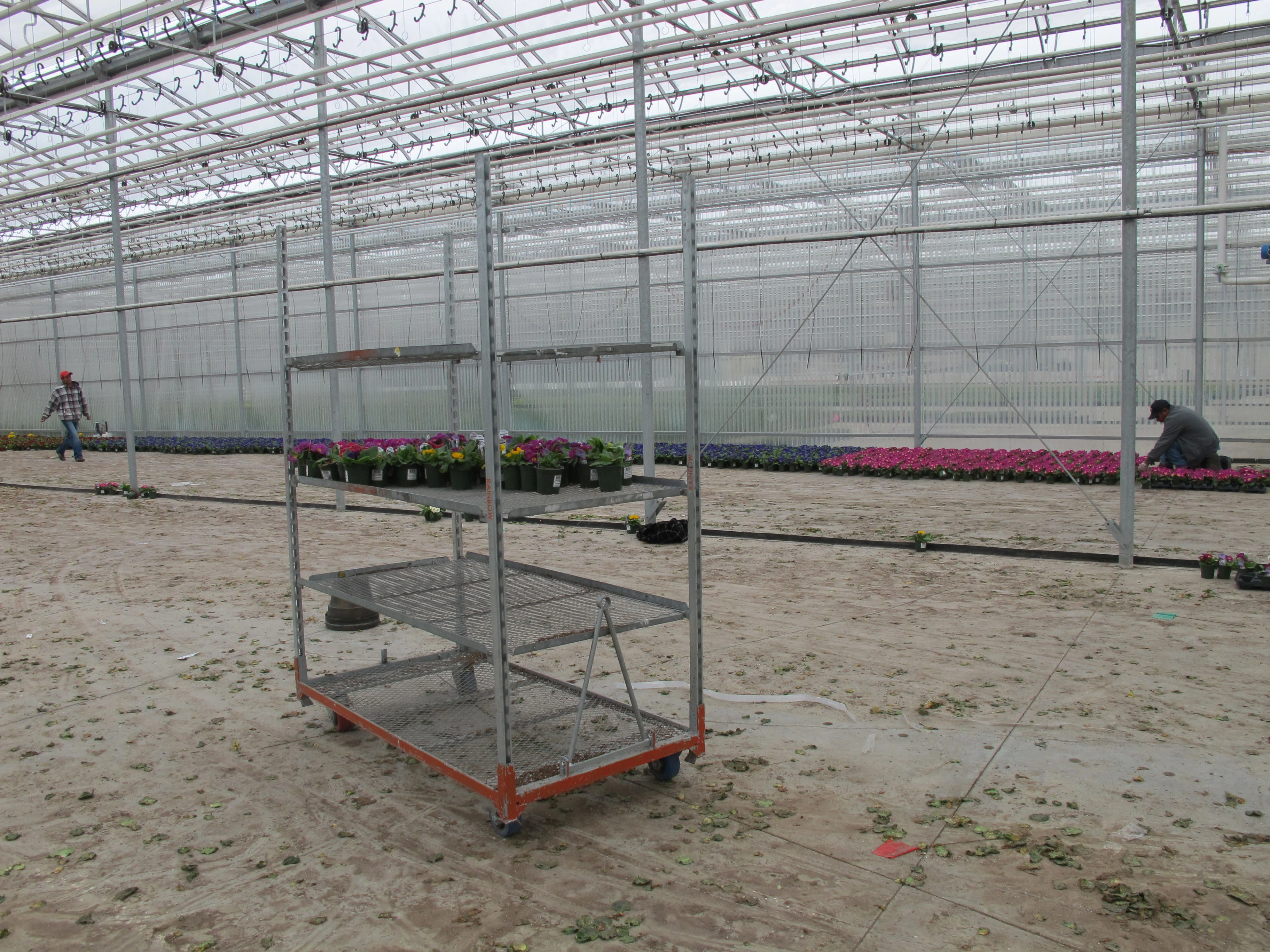
Various pieces of equipment, such as carts, require sanitation and maintenance, Hammer says. Growers should oil the wheels on carts and clean them regularly to prevent the spread of diseases. “If it moves, it probably needs some oil or grease – and it probably needs to be cleaned,” he says. “That covers everything – it covers heating, and it covers fans, and it covers carts, and it covers conveyors, and it covers louvers.”
Some growers also choose to keep problem plants instead of just throwing them away, Hammer says. If, instead, they just threw them away, they would feel a sense of relief. Many of the greenhouses that don’t appear to have problems do, he says, but they “just throw the problems away.”
Cleanliness and neatness affect the employee culture within a greenhouse, Hammer says. “Everybody reacts to that,” he says. “But it’s an everyday thing. It’s not just once a year. You clean it up, but you have to keep working at it every single day, too.”
Photo courtesy of Dr. P. Allen Hammer
Latest from Greenhouse Management
- The Growth Industry Episode 10: State of the Horticulture Industry
- Millennium Pacific Greenhouses launches California Grown Cucumber Program
- Scientists develop vitamin A-enriched tomato to fight global deficiency
- Tennessee Green Industry Field Day scheduled for June 11
- UTIA and UT Knoxville research teams will develop automated compost monitoring system
- Ken and Deena Altman receive American Floral Endowment Ambassador Award
- [SNEAK PEEK] Leading Women of Horticulture: The women of Fairview Greenhouses & Garden Center
- [SNEAK PEEK] Leading Women of Horticulture: The inventive women of TPIE ’26