By David Kuack, Hort Americas
“More and more students who are interested in greenhouse production want to learn about growing food crops. To accommodate this interest, we are starting a new class in which we are teaching about the production of tomatoes, cucumbers, greens and other food crops. We are putting in different kinds of production systems including hydroponics. The students will have a really well outfitted lab where they can go in and they will be raising various food crops with different systems. It will be hands-on.”
Evans said the growing interest in greenhouse food crops has rejuvenated him and his program.
“As the ornamental side of the greenhouse industry has been undergoing consolidation with fewer but larger operations, we have seen an increased interest from the industry in growing greenhouse food crops,” he said. “The number of emails and phone calls related to greenhouse food crops have greatly increased.
Evans has started working with fellow university horticulture assistant professor and breeder Ainong Shi.
“We are interested in looking at new species of fresh greens and the breeding of greens,” Evans said. “We are particularly interested in developing crops that can take Southern hot climates. By converting our facilities to focus on greenhouse food crops we are looking to become a central institution to study new species of greens, developing new crops, breeding new cultivars, and developing production protocols for these crops.”
Evans said the agriculture industry in the United States has been largely field-based, but there are signs that changes are occurring when it comes to controlled environment food production.
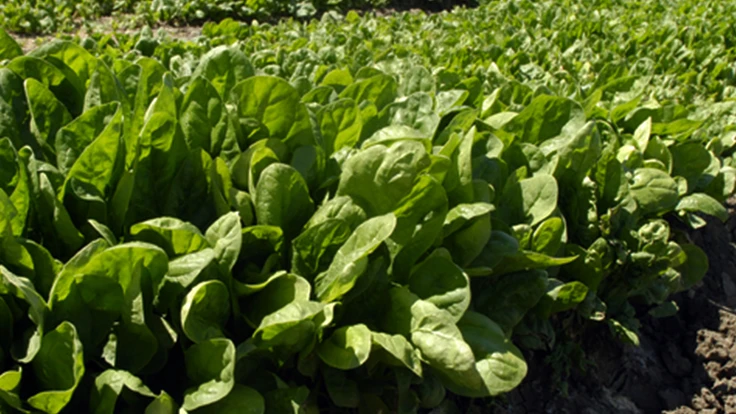
One of the crops that Evans will be looking at regarding new species is fresh greens.
“Most of the greens research, including breeding, being done in this country, by-and-large, is for field production,” he said. “Those same varieties that were originally evaluated in the field are then taken and grown in the greenhouse. We typically have not bred varieties for greenhouse production.
“We want to find greens that have lower inputs, that don’t need much water or fertilizer. They also shouldn’t have many pest problems, have a rapid production cycle and can especially take heat.”
Evans said the issue with heat is a major obstacle for greens grown in the southern United States.
“The problem that growers in the southern half of the U.S. run into during the summer is what kind of greens can they produce? Greens in the South are more of an early spring and late fall crop. The question is can we develop greens that can be grown in the heat of summer?”
Read the rest of the article here.
.JPG)
Photo by Mike Evans, Univ. of Arkansas
Latest from Greenhouse Management
- The Growth Industry Episode 10: State of the Horticulture Industry
- Millennium Pacific Greenhouses launches California Grown Cucumber Program
- Scientists develop vitamin A-enriched tomato to fight global deficiency
- Tennessee Green Industry Field Day scheduled for June 11
- UTIA and UT Knoxville research teams will develop automated compost monitoring system
- Ken and Deena Altman receive American Floral Endowment Ambassador Award
- [SNEAK PEEK] Leading Women of Horticulture: The women of Fairview Greenhouses & Garden Center
- [SNEAK PEEK] Leading Women of Horticulture: The inventive women of TPIE ’26