A new method of culture takes root in Haiti. At the initiative of the U.S. Agency for International Development (USAID), a "greenhouses revolution" is bearing exceptional harvests, increasing incomes and countering environmental degradation.
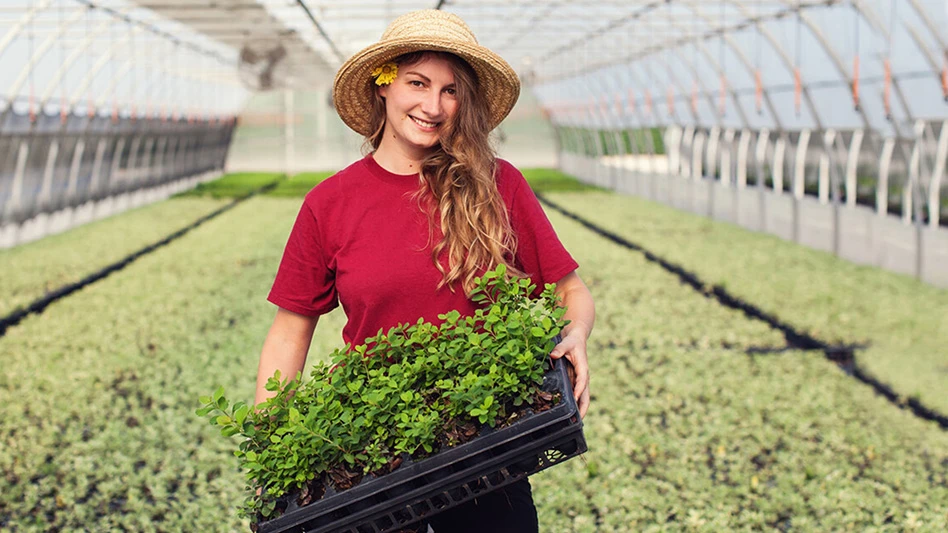
The use of greenhouses is a common practice in many countries but unknown in Haiti until recently. Participating farmers, who previously were ready to abandon their increasingly challenging trade, are producing larger yields and are trading their produce more efficiently and for higher profits. That bounty includes lettuce, broccoli, peppers, tomatoes, leeks, beets, carrots, strawberries and flowers such as chrysanthemums and gladioli. These are now sold locally to supermarkets, hotels, restaurants and farmers markets.
About 60% of Haitians depend on agriculture for their income. But making ends meet is difficult and, until recently, agricultural productivity has systematically declined over the last three decades. The January 2010 earthquake prompted the Government of Haiti and its partners, including the U.S. Government, to put into place a new, comprehensive development strategy for guiding medium-term agricultural investments. USAID contributes through Feed the Future, the U.S. Government’s global hunger and food security initiative, as a major part of this effort.
USAID has introduced agricultural training and better technologies, rehabilitated rural infrastructure, strengthened trade and marketing skills, and established farmers’ cooperatives to be able to form partnerships between farmers’ associations, private companies and other parties.
One effective productivity booster has been the adoption of greenhouses by smallholder farmers like Dorlean. Introduced by Feed the Future West, the greenhouse model is a tunnel-like, lightweight structure made of wood, PVC pipes and a plastic cover resistant to UV rays. Some greenhouses use local materials such as bamboo for support. A water-efficient drip-irrigation system is used, while some farmers’ collectives also catch rainwater to irrigate their crops. Because the flower and vegetable pots are arranged vertically, the farmers can produce more within a smaller space.
An average Haitian flower producer using traditional methods makes $170 per year on a surface of 1,000 square meters; a farmer who owns a greenhouse can generate between $1,500 and $2,500 annually, depending on the crop, on only a 70-square meter area—a staggering difference.
A 70-square meter greenhouse typically costs about $3,000, including the greenhouse structure, pots and drip-irrigation system. So far, Feed the Future West has supported the construction of 300 greenhouses in Haiti, and several farmers associations are now funding and building their own greenhouses and providing construction training and assistance to other associations.
In addition to increasing incomes for rural Haitians, Feed the Future also helps reduce farming’s impact on water and land—precious resources on the island nation. Feed the Future West has been working with farmers harvesting vegetables, flowers and fruit to promote sustainable agriculture on hillsides by focusing on protected and vertical agriculture through small, drip-irrigated greenhouses.
Read the rest of the story here.
Latest from Greenhouse Management
- The Growth Industry Episode 10: State of the Horticulture Industry
- Millennium Pacific Greenhouses launches California Grown Cucumber Program
- Scientists develop vitamin A-enriched tomato to fight global deficiency
- Tennessee Green Industry Field Day scheduled for June 11
- UTIA and UT Knoxville research teams will develop automated compost monitoring system
- Ken and Deena Altman receive American Floral Endowment Ambassador Award
- [SNEAK PEEK] Leading Women of Horticulture: The women of Fairview Greenhouses & Garden Center
- [SNEAK PEEK] Leading Women of Horticulture: The inventive women of TPIE ’26