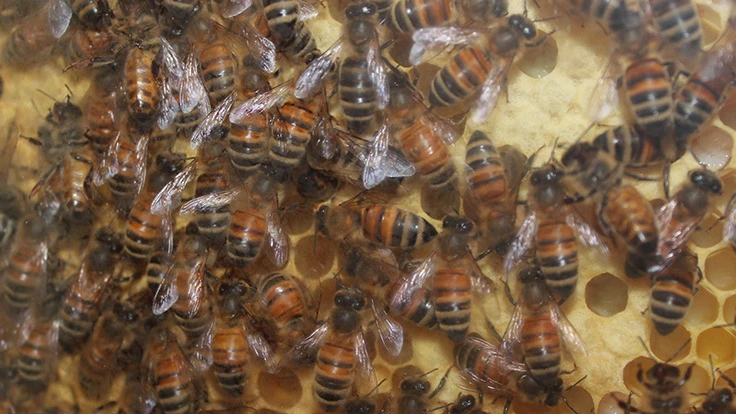
A University of Wisconsin-Stout biology professor and his students may have made an important discovery in the effort to determine why honey bee hives are dying out during the winters in the Upper Midwest.
Biology professor Jim Burritt and his students have published research about a new strain of the bacterium called Serratia marcescens strain sicaria. With evidence of its killing power, they chose the name sicaria, which means assassin, and Ss1 for short.
“Our results indicate that Ss1 may contribute to the wintertime failure of honey bee colonies. We believe this is important because most beekeepers in our area lose over half of their hives each winter. In Dunn County, the percentage of winter hive failure rates has been as high as 80 percent recently,” said Burritt, himself a longtime beekeeper.
The bacterium came to light under a microscope at UW-Stout as researchers looked for a different organism in blood drawn from sick bees in Dunn County. They saw something unexpected.
Latest from Greenhouse Management
- The Growth Industry podcast Episode 10: State of the Horticulture Industry
- Millennium Pacific Greenhouses launches California Grown Cucumber Program
- Scientists develop vitamin A-enriched tomato to fight global deficiency
- Incubating invention
- Tennessee Green Industry Field Day scheduled for June 11
- UTIA and UT Knoxville research teams will develop automated compost monitoring system
- Ken and Deena Altman receive American Floral Endowment Ambassador Award
- [WATCH] Taking root: The green industry’s guide to successful internships