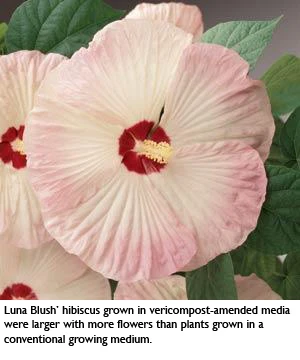
Vericomposting is the process of using worms to turning organic waste into a nutrient end product that contains plant-available nutrients. Researchers at N.C. St. Univ. conducted a study to determine if a pine bark growing mix amended with 20% vericompost derived from pig manure could be used to grow ‘Luna Blush’ hibiscus plants. The vericompost plants were compared with control plants grown in a pine bark medium that received conventional nutrient inputs.
Data was collected 35 and 56 days after potting. Science Daily reports that the plant nutrient content (phosphorus, calcium, magnesium, sulfur, iron, manganese, zinc, copper and boron) of the vericompost plants were equivalent or greater than hibiscus grown with conventional nutrient inputs. At 56 days the vericompost-produced plants were larger with more flowers than the control plants. The researchers suggested that due to the higher levels of nutrients in the vericompost-amended medium could allow for the elimination of substrate additives including dolomitic lime, sulfonated micronutrients and phosphorus.